
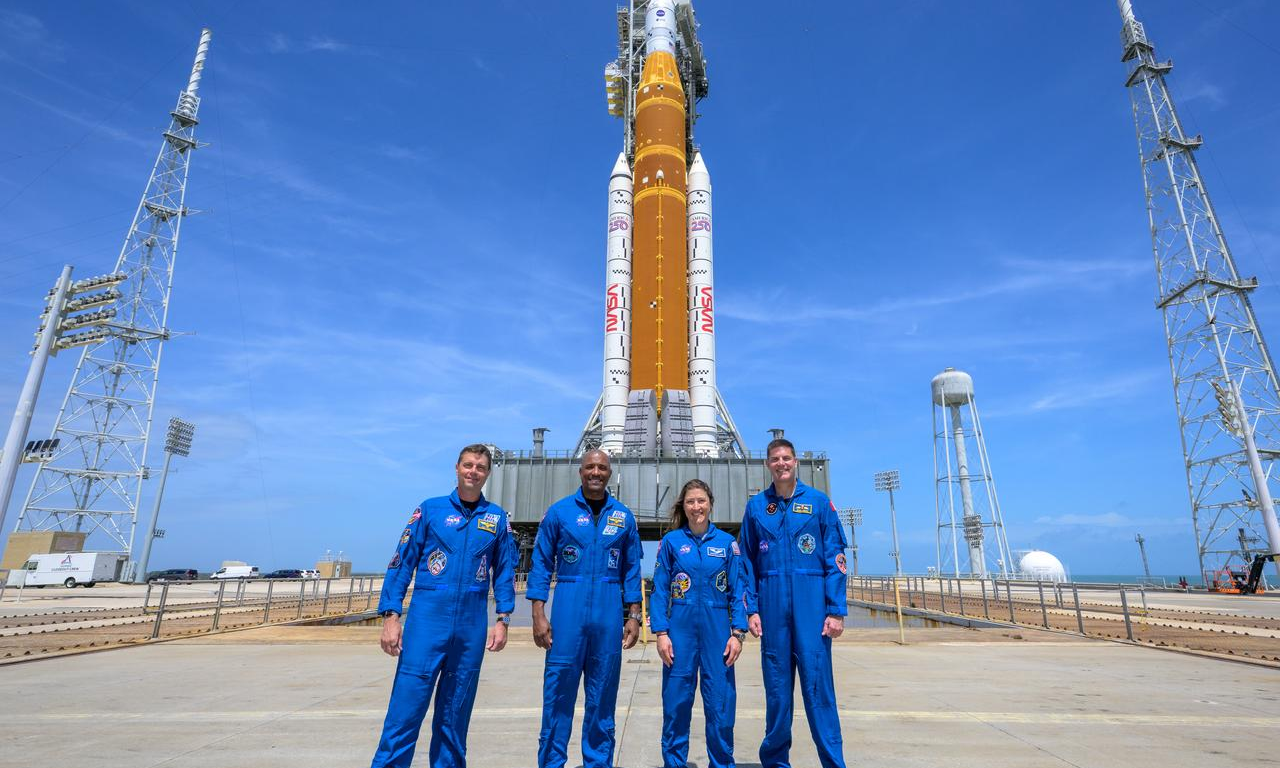
NASA’s Artemis II mission officially transitioned from Earth orbit to a lunar trajectory on April 2, 2026, following a successful five-minute and 50-second Translunar Injection (TLI) burn. The maneuver, executed by the crew of Commander Reid Wiseman, Pilot Victor Glover, and Mission Specialists Christina Koch and Jeremy Hansen, marks the first time human beings have left Earth orbit since the Apollo 17 mission in 1972. This mission effectively ends a “54-year intermission” in deep space exploration and represents a landmark moment for the Canadian Space Agency (CSA), as Hansen becomes the first non-American to journey toward the moon.
Launch Performance and Early Orbit
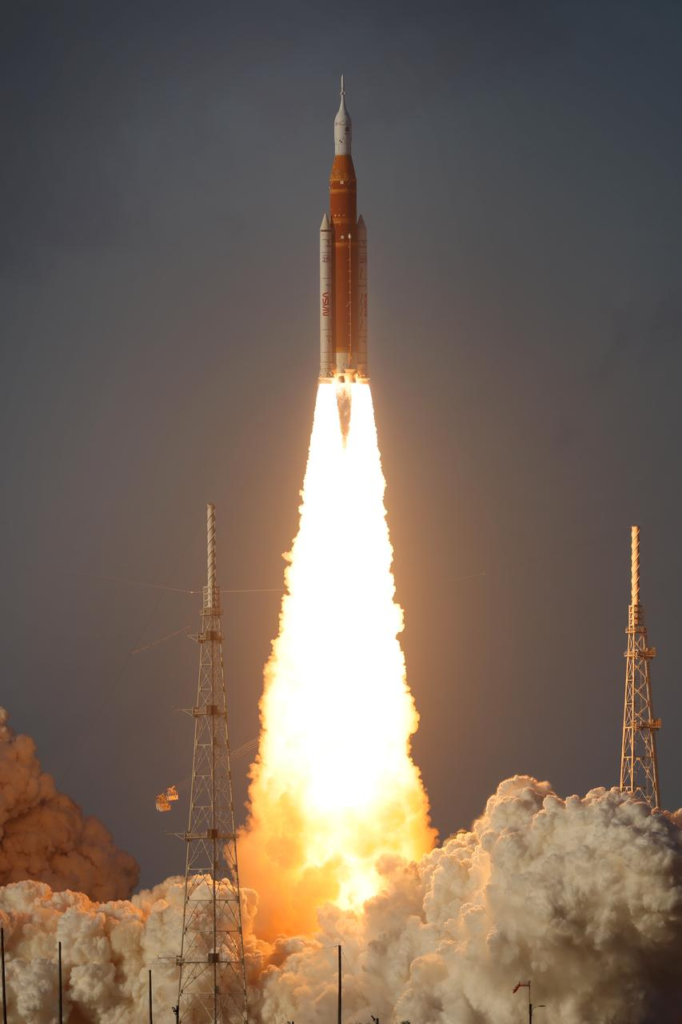
The mission began at 6:35 p.m. on April 1, with the Space Launch System (SLS) rocket clearing the pad at Kennedy Space Center with 8.8 million pounds of thrust. Shortly after liftoff, Jared Isaacman noted during a news conference that the rocket successfully carried the Orion spacecraft and its crew into orbit, signaling that NASA is back in the business of sending astronauts to the moon. While the Orion spacecraft separated from the core stage and deployed its solar arrays as planned, the early hours of the flight were not entirely without technical hurdles.
Ground teams encountered what Norm Knight, NASA’s director of flight operations, described as a “squirrely ground configuration” during a communication handover at the White Sands Ground Terminal. A software bug caused the terminal to report that commands had been accepted when they had not actually taken effect, resulting in intermittent links. Knight confirmed that while the ground configuration was an issue, the “burns that they needed on board was never an issue.”
TLI: The Push Toward the Moon
The most critical phase of the mission’s early sequence was the TLI burn, which used the energy of the Interim Cryogenic Propulsion Stage (ICPS) to break free of Earth’s gravity. Flight Director Judd Frieling reported that the performance of both the SLS during ascent and the ICPS during the burn was “right on the money.” This maneuver pushed the crew to a maximum speed of 24,500 miles per hour, setting them on a path that will reach a maximum distance of 219,639 nautical miles from Earth.
Lori Glaze, acting deputy associate administrator for the Exploration Systems Development Mission Directorate, highlighted the historical gravity of the burn by noting that human beings have officially left Earth orbit for the first time in over half a century. From this point forward, the laws of orbital mechanics will carry the crew toward the far side of the moon and back to Earth.
Troubleshooting Off-Nominal Events
Operating a new spacecraft in deep space has revealed several technical challenges that the crew and ground teams have had to address in real-time. Norm Knight noted that these types of issues are often a result of the violent forces of a heavy-lift launch, stating that “when you shake the thing, things like that happen.” One notable hardware failure involved an isolation valve between two of Orion’s water tanks that failed in the closed position during ascent. In an “abundance of caution,” the crew has begun bagging backup water just in case of a secondary failure.
The crew also had to perform manual troubleshooting on the waste management system after a controller issue prevented the toilet pump from priming. Once the crew added more water to fully wet the pump, the system returned to service. Additionally, the TLI burn itself triggered a false cabin leak alarm when a change in fan speed caused a sensor dip below the caution limit. The spacecraft has also experienced transient electronic failures—specifically a latching current limiter—which mission officials attributed to radiation exposure as the vehicle left the protection of the Earth’s atmosphere.
Proximity Operations and Future Milestones
Before committing to the long-range transit, the crew successfully completed a Proximity Operations (Prox Ops) demonstration. This test evaluated Orion’s handling during close-range maneuvering, which is a vital capability for future missions intended to dock with the Lunar Gateway. Howard Hu, the Orion Program manager, noted that the vehicle “performed better than they expected,” which is significant given that the crew is very dependent on cameras and lidar for close-in work compared to the direct window visibility of the Space Shuttle.
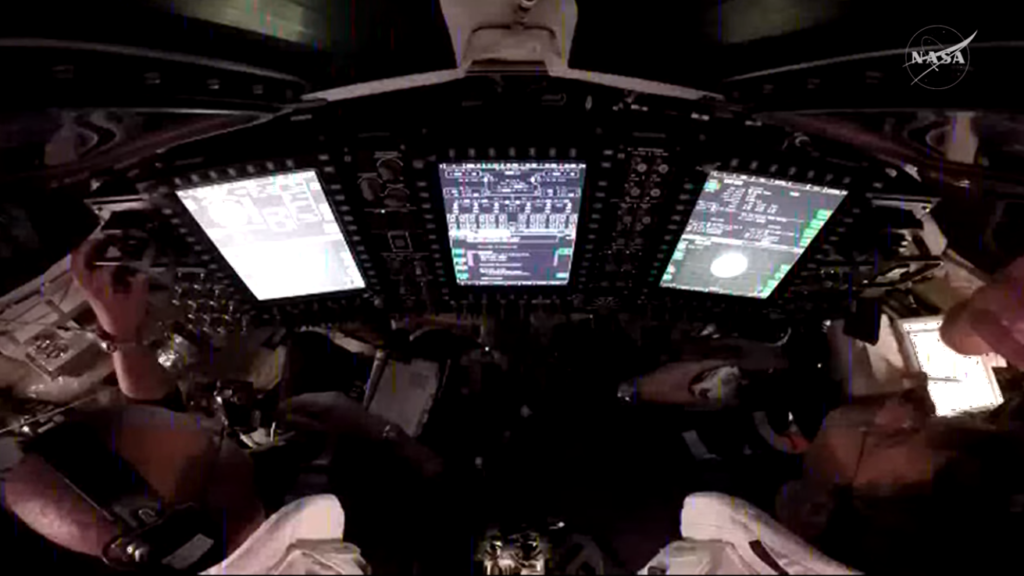
A view over the shoulders of NASA astronauts Victor Glover (left) and Reid Wiseman (right), pilot and commander, respectively, inside the Orion spacecraft as they participate in a proximity operations demonstration. This demonstration tests the spacecraft’s ability to manually maneuver relative to another spacecraft, the interim cryogenic propulsion stage, after separation, using its onboard navigation sensors and reaction control thrusters. (Source: NASA) 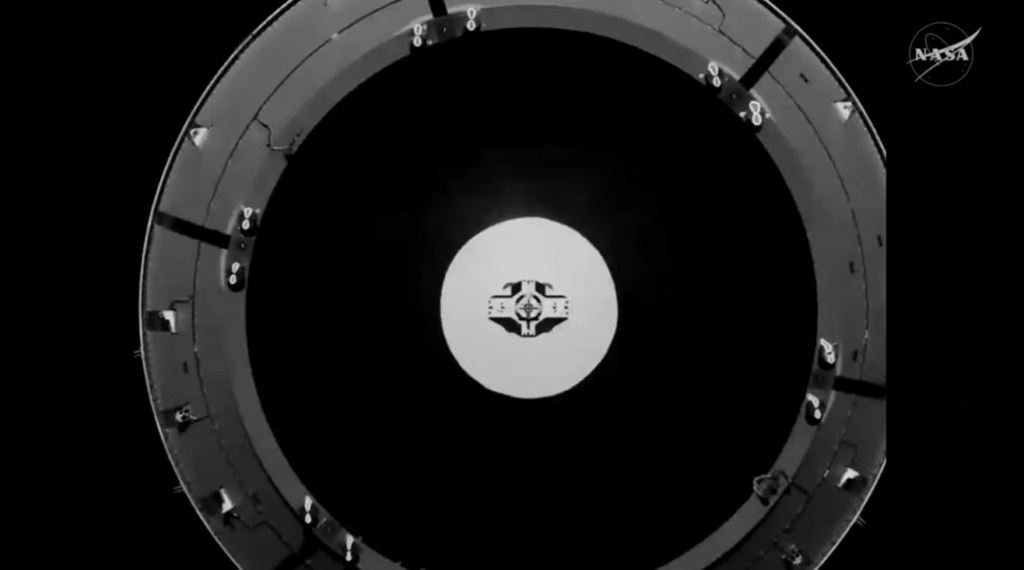
A view from the docking camera on NASA’s Orion spacecraft. (Source: NASA)
The crew is now settling in for the transit toward a major milestone on Flight Day 6. As Reid Wiseman, Victor Glover, Christina Koch, and Jeremy Hansen pass behind the moon, they will witness a unique solar eclipse where the moon blocks the sun. Lori Glaze explained that this will give the crew a rare opportunity to see the sun’s corona with their own eyes before the spacecraft begins its return journey to Earth.
If you want more from The Tech News Source, follow the site on Twitter at @technewssoure and me on Twitter at @SamGreenwoodTNS. If you’d like to support The Tech News Source, you can find out how to here. You can also visit my website at samgreenwood.ca to see more of what I do, including my photography and the occasional movie review.